
Introduction
When planning a web project, understanding financial commitments is vital. Whether you are launching a new startup, revamping an enterprise portal, or shifting from a legacy platform, getting clarity on market rates prevents unexpected overruns.
As a practitioner who builds digital products using modern frameworks like Next.js, React, WordPress, and Shopify, I often speak with founders who received wildly conflicting quotes for the exact same scope. This guide breaks down the real variables that influence pricing in the Indian market, helping you evaluate proposals objectively and choose the right partner.
For broader context on evaluation criteria, you can explore how to choose the best web developer in India or review traits that make a professional web developer in India worth hiring.
The Real Cost Drivers (Beyond Just "Number of Pages")
Counting pages is a misleading way to estimate project scope. Two five-page websites can have vastly different budgets based on underlying requirements:
- Custom UI/UX Design vs. Templates: Using pre-made themes reduces upfront design time, whereas bespoke user experience research, wireframing, and custom interfaces require dedicated design hours.
- Architecture & Tech Stack: Deploying a standard CMS differs substantially from building a bespoke application with React or Next.js. Rendering architecture, API structures, and hosting configurations influence development time.
- Third-Party Integrations: Connecting basic contact forms is straightforward. Integrating complex CRMs, payment gateways, multi-currency conversion, or enterprise resource planning (ERP) tools adds specialized engineering overhead.
- E-Commerce Complexity: A simple product catalog differs entirely from a high-SKU store with tiered pricing, localized taxation, and custom inventory syncs handled via robust platforms like Shopify.
Pricing by Project Type and Technology Stack
Different project scopes demand distinct technical environments. Reviewing standard tiers helps align your requirements with realistic market investments.
| Project Type | Typical Tech Stack | Complexity Level | Primary Deliverables |
|---|---|---|---|
| Static Brochure Sites | WordPress / Custom HTML | Low to Moderate | Responsive layouts, CMS training, basic SEO setup |
| Dynamic Business & SaaS Apps | Next.js / React / Advanced WordPress | Moderate to High | Custom UI, interactive components, performance optimization |
| E-Commerce Stores | Shopify / WooCommerce | Moderate to High | Secure checkout, catalog management, payment gateway integration |

Freelance vs. Agency Pricing Models
How a team structures their pricing reflects their internal operations, overhead, and accountability levels. Understanding these models helps when deciding whether to hire a web developer in India on a freelance basis or through an established agency.
- Hourly Rates: Common for ongoing support, iterative design, or undefined scopes. While flexible, total costs can become unpredictable without strict milestone tracking.
- Fixed-Price Project Quotes: Best for well-defined scopes with finalized wireframes. Both parties agree on deliverables and timelines upfront, minimizing budget surprises.
- Retainer Agreements: Ideal for continuous growth, performance monitoring using tools like PageSpeed Insights, and iterative feature rollouts.
For specific scenarios where independent specialists excel, read more on partnering with a freelance web developer in India or consult a detailed website developer in India hiring guide.
How to Compare Two Website Development Quotes
Do not compare only the final totals. Put each proposal into the same scope table and check whether design, responsive states, content entry, integrations, analytics, technical SEO setup, testing, migration, deployment, documentation, training, and post-launch support are included or excluded. A lower quote can be genuinely better value, but only when the deliverables and responsibilities are comparable.
Also note what happens when requirements change. Ask how additional work is estimated and approved, who pays for third-party software or hosting, and which assets you will own at handover. This makes the budget decision based on total project scope rather than an attractive headline number.
Hidden Costs to Anticipate
Beyond initial design and development fees, project budgeting must account for recurring operational expenses:
- Domain & Hosting: Annual domain registration and robust cloud or managed hosting services.
- Security & Compliance: SSL certificates, regular backups, and security hardening against vulnerabilities.
- Paid Plugins & Themes: Commercial licenses for specialized plugins, payment gateways, or UI component libraries.
- Post-Launch Maintenance: Ongoing updates, content adjustments, and technical troubleshooting to ensure stable performance.
The Project Scope and Budget Alignment Scorecard
To help you assess what investment tier your project requires, use this simple four-dimensional scorecard:
- Design Complexity: Score from 1 (Standard template) to 5 (Custom design system and user research).
- Architecture & Tech Stack: Score from 1 (Out-of-the-box CMS) to 5 (Headless custom application).
- Integration Needs: Score from 1 (Simple contact form) to 5 (Deep enterprise API and CRM sync).
- Support Scope: Score from 1 (Launch-and-leave) to 5 (Continuous performance optimization and feature iteration).

Red Flags in Low-Ball Quotes
Extremely low quotes often indicate hidden trade-offs in scoping, quality assurance, or ongoing support. Watch out for these warning signs:
- Vague proposals lacking detailed deliverables or technical specifications.
- Absence of structured staging environments or code review processes.
- Omitted ownership rights regarding source code and repository access.
- Unrealistic delivery timelines that skip vital testing phases.
Ownership, Contracts, and Payment Terms
Protecting your digital asset requires clear contractual terms:
- Source Code Ownership: Ensure the contract explicitly transfers full ownership of all source code, design files, and repository credentials upon final payment.
- Staging Environments: Insist on reviewing progress on a private staging server before changes go live.
- Milestone Payments: Tie payments to verifiable project milestones (e.g., design sign-off, staging review, final deployment) rather than upfront lump sums.
Scope and budget checkpoints for future website projects
These checks add practical verification steps to the framework above. Test them against your actual business setup and measure outcomes rather than assuming any particular result.
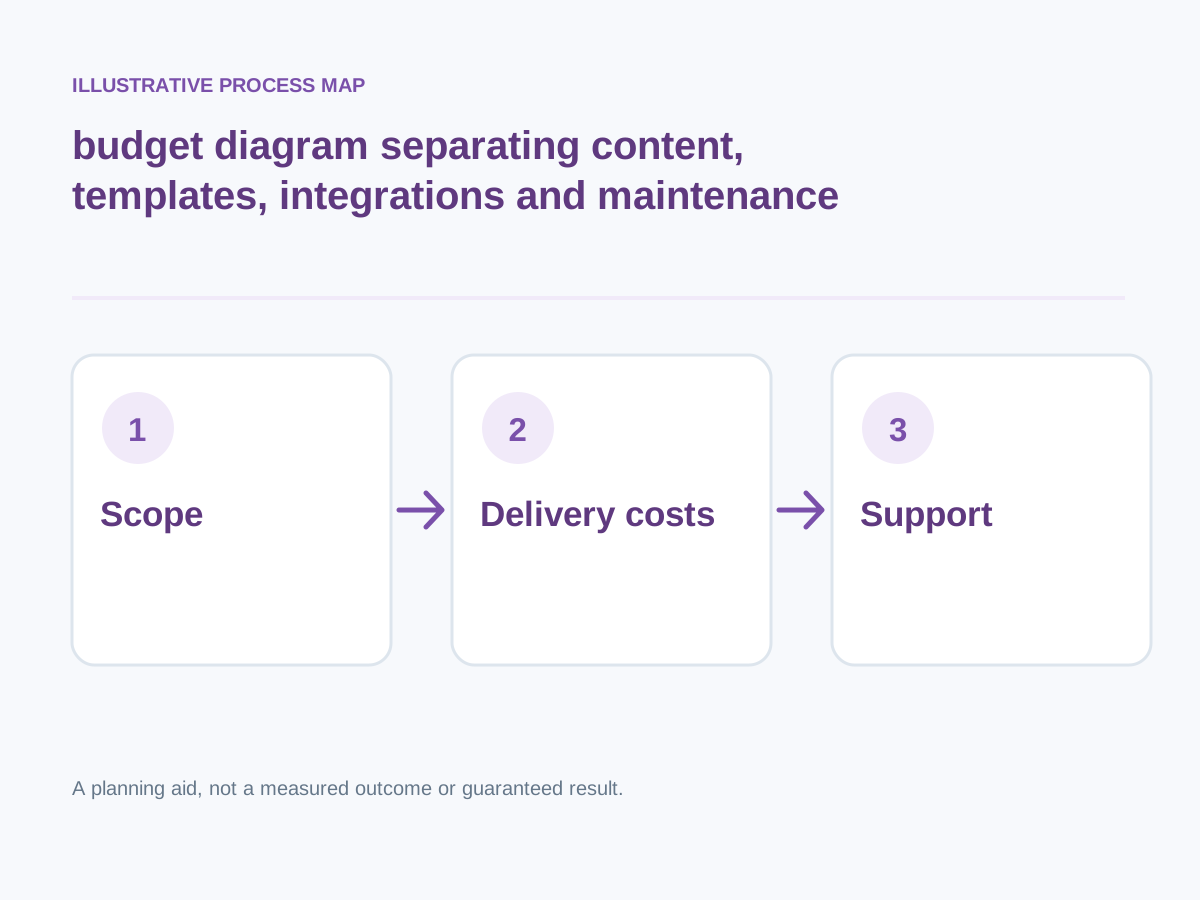
Conceptual illustration; not a client screenshot or measured result.
Clarify design fidelity and accessibility
Agree on design rounds, brand assets, mobile breakpoints, semantic markup, form handling and keyboard navigation expectations.
How to verify: Ask for a sample responsive prototype and acceptance criteria.
Select phased delivery when uncertain
Start with the highest-impact pages and integrations, then expand based on measured usage and customer feedback.
How to verify: Ensure the architecture supports later phases without promising speculative features now.
Identify CMS and editorial needs
Decide who edits content, how often it changes, who approves changes, and whether a visual editor or structured CMS fits the team.
How to verify: Simulate a real employee updating a page in the proposed editing workflow.
List external integrations
Specify payments, calendars, CRM, email, chat, maps, inventory, authentication, analytics and API dependencies before receiving quotes.
How to verify: Record integration ownership, paid subscriptions and data-processing requirements.
Budget for copy and photography
Professional writing, translation, product photography, image rights and case-study approvals can materially change both cost and timelines.
How to verify: Mark who will provide, verify and approve each asset.
Write the business goal before the budget
Separate brand awareness, lead generation, online sales, self-service workflows and recruitment. Each requires different design and development effort.
How to verify: Review whether every proposed feature directly supports a defined business outcome.
Allow realistic QA and revisions
Include time for browser testing, content corrections, performance diagnostics, stakeholder sign-off, and launch checks.
How to verify: Confirm milestones, feedback turnaround, and what counts as out-of-scope.
Compare proposals by value and exclusions
A cheaper quote may omit migrations, redirects, training, analytics, or post-launch fixes; assess deliverables rather than headline price alone.
How to verify: Create a comparison matrix covering scope, risks, support and total cost.
Next step: Prioritise the checks relevant to your project, record a baseline, test changes and consult the website development services or book a consultation for implementation support.
Conclusion and Next Steps
Evaluating website development costs requires looking past arbitrary price tags and analyzing your exact functional requirements, tech stack preferences, and long-term business goals.
If you are mapping out a new web project and want to discuss custom architecture, clean code practices, and transparent scoping, feel free to reach out to me directly.