
The 3-Pillar Coach-Site Blueprint
Before diving into design mockups or code repositories, I establish a solid framework that addresses the core realities of selling professional services online. I call this the 3-Pillar Coach-Site Blueprint:
- Positioning (The Hook): Clearly articulating your unique methodology, target audience, and the exact transformation you deliver.
- Performance (The Foundation): Ensuring your site loads instantly and delivers a seamless experience across all devices.
- Pathways (The Conversion): Mapping out a logical journey that moves a visitor from a casual reader to a booked discovery call.
Adopting this structure prevents the common trap of building a visually pleasing website that generates zero qualified leads. Consulting engagements often involve high financial and emotional investments from buyers; therefore, your site must systematically dismantle skepticism and establish professional trust within seconds of landing on the homepage. Without this deliberate architecture, visitors wander through disconnected pages, unable to find a clear path toward engaging your advisory services.

Phase 1: The Strategy Audit
Before writing a single line of code or setting up a database, you must audit your positioning and audience intent. Coaches often make the mistake of talking about themselves rather than the client's pain points. A professional website exists to solve problems for the visitor, not to serve as an online resume.
During this foundational planning phase, map out:
- The exact friction and operational bottlenecks your ideal client experiences right before they search for expert help.
- The specific outcomes and qualitative transformations your coaching programs or consulting engagements deliver.
- How your free resources, whitepapers, or lead magnets fit into the initial awareness stage to capture contact details legitimately.
As I outline in my guide on how I audit a website that is not generating leads, identifying messaging disconnects early saves countless hours during development. If your current traffic bounces without exploring your services, the issue rarely lies in color palettes or typography; it stems from a fundamental mismatch between visitor expectations and the value proposition presented on screen. Clarifying your message before touching code ensures that every downstream design decision reinforces your professional authority.
Phase 2: Choosing the Tech Stack and Architecture
Selecting the right technology stack is a critical decision that impacts future maintenance, speed, and scalability. As a professional web developer, I evaluate platforms based on the specific operational needs of the practice rather than chasing fleeting design trends or bloated toolsets.
- WordPress: Ideal for coaches who plan to publish extensive thought-leadership blogs, maintain active resource libraries, and require flexible content management. For optimization strategies, you can explore how I approach WordPress performance optimisation.
- Next.js / React: Suited for consultants who require highly customized branding, ultra-fast interactions, and specialized interactive diagnostic tools or calculators.
Your technical choice should support your long-term content strategy without introducing unnecessary maintenance overhead or stability issues. Furthermore, when evaluating your overall budget and operational requirements, understanding the baseline website development cost in India helps you allocate resources effectively across design, engineering, and ongoing maintenance. Choosing the right foundation prevents unexpected technical debt and keeps your digital platform secure over years of advisory growth.
Phase 3: The Conversion Architecture and User Journey
A well-planned website guides the visitor intuitively through several key pages, ensuring they never feel stranded or confused about what to do next. For coaches and consultants, the site architecture must mirror a consultative sales conversation.
- The Homepage: Must instantly communicate who you help, how you help them, and what action to take next. It acts as the digital reception area, validating the visitor's decision to click.
- Service Pages: Detailed breakdowns of your consulting packages, target outcomes, engagement models, and the exact steps clients go through when working with you.
- About Page: Not just a chronological resume, but a trust-building narrative explaining why you do what you do, your core philosophy, and who you are uniquely qualified to help.
Ensure that every page follows foundational SEO practices, including clean URL structures and optimized metadata as outlined in the Google Search Central SEO Starter Guide. When structuring your service offerings, avoid vague jargon. Clear, benefit-driven headings allow prospective clients to immediately self-identify and recognize that your expertise directly addresses their operational bottlenecks.
Phase 4: Technical Hygiene and Performance
Technical performance directly influences how users perceive your professionalism. Slow-loading pages frustrate potential clients and increase bounce rates before they even read your pitch.
While good scores do not guarantee top search rankings, page speed is a vital component of the overall user experience evaluated by Google's page experience systems. You can evaluate your live baseline performance using tools like Google PageSpeed Insights.
In addition to load speeds, technical hygiene involves ensuring your site remains secure, updating plugins or dependencies systematically to prevent breakage, and maintaining clean schema markup. For consulting websites, structured data helps search engines understand your organization, author profiles, and professional services, leading to richer and more accurate search representations.
Evaluating Your Current Consulting Website Plan
When reviewing an existing site architecture or a newly proposed wireframe, take a methodical approach to ensure nothing vital has been overlooked. Professional service buyers behave differently than retail consumers; they require deeper validation and clearer paths to interaction.
- Message Clarity: Does your primary headline immediately signal who the coaching is for and the tangible transformation they can expect?
- Friction Reduction: Are booking widgets and contact forms embedded naturally at the end of logical reading flows rather than hidden behind obscure menu links?
- Mobile Responsiveness: Do all interactive elements, testimonials, and scheduling links render cleanly on smaller screens where many professionals check resources?
- Code Maintainability: Is the underlying platform structured so that your team can update copy and publish insights without breaking layout integrity?
By running your project plan against these four foundational checkpoints, you safeguard your digital investment and build a reliable engine for long-term client acquisition.

Improving consultation quality and booking conversion
These checks add practical verification steps to the framework above. Test them against your actual business setup and measure outcomes rather than assuming any particular result.
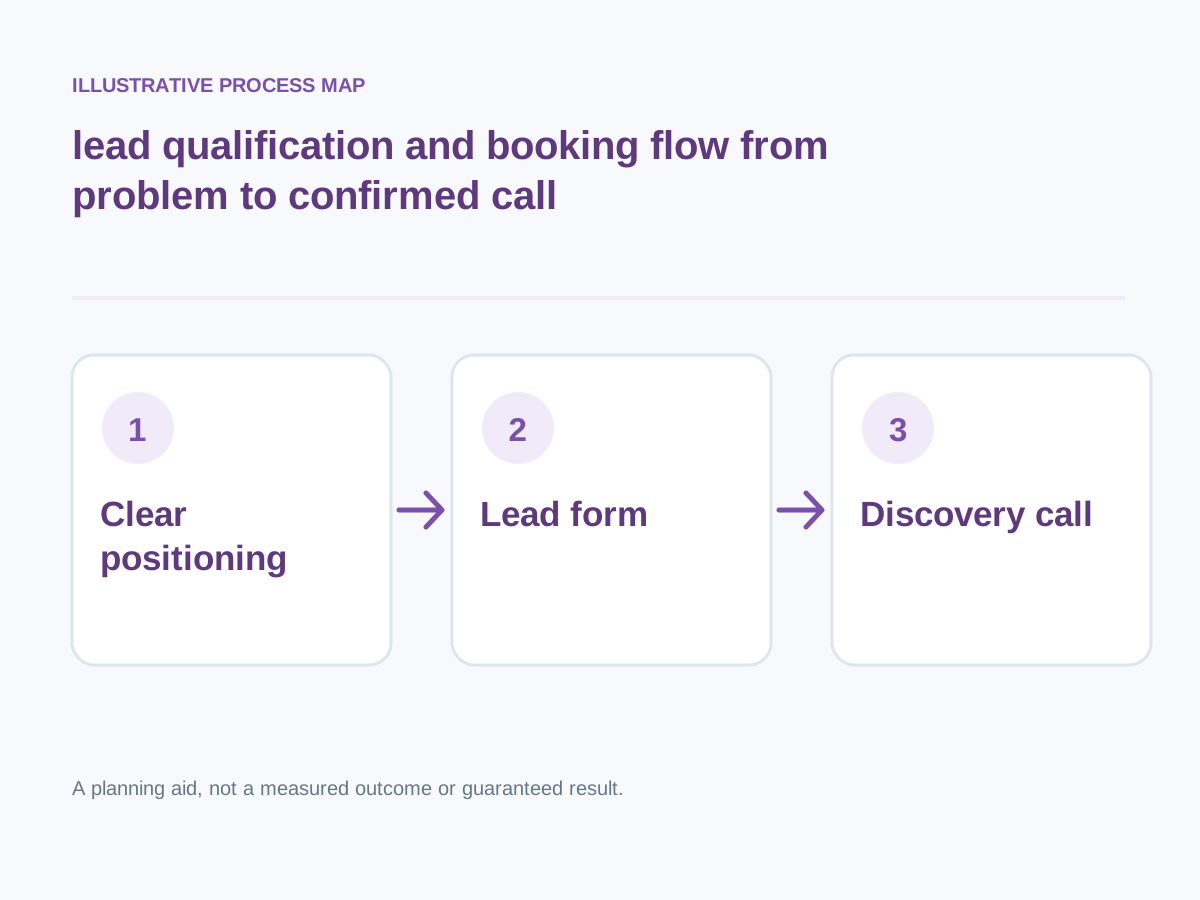
Conceptual illustration; not a client screenshot or measured result.
Measure lead qualification
Track booked consultations, attendance, fit, proposal requests and signed work.
How to verify: Review CRM notes and follow-up times.
Address objections before the call
Explain location/time zones, delivery mode, expectations, pricing approach and refund or cancellation terms.
How to verify: Review repeated pre-sales questions.
Define the ideal client precisely
Describe who the service helps, the problem category, readiness criteria and situations outside the offer.
How to verify: Compare website enquiries to actual fit.
Present authentic expertise
Describe training, background, original writing and permissioned examples; avoid invented client counts.
How to verify: Confirm credentials and testimonials.
Offer a useful consultation next step
Explain who a free call is for, expected duration, preparation and possible outcomes without fake urgency.
How to verify: Complete a booking on mobile and confirm calendar receipt.
Use email ethically
Offer voluntary educational resources with clear consent rather than buying lists or excessive follow-ups.
How to verify: Review subscribe and unsubscribe flows.
Refine based on actual conversations
Use recurring objections and client questions to improve page content and service definitions.
How to verify: Document monthly themes from real enquiries without exposing private data.
Show the working method
Share frameworks, decision tools and examples without pretending every client receives identical results.
How to verify: Document which elements are repeatable and which are customized.
Next step: Prioritise the checks relevant to your project, record a baseline, test changes and consult the website development services or book a consultation for implementation support.